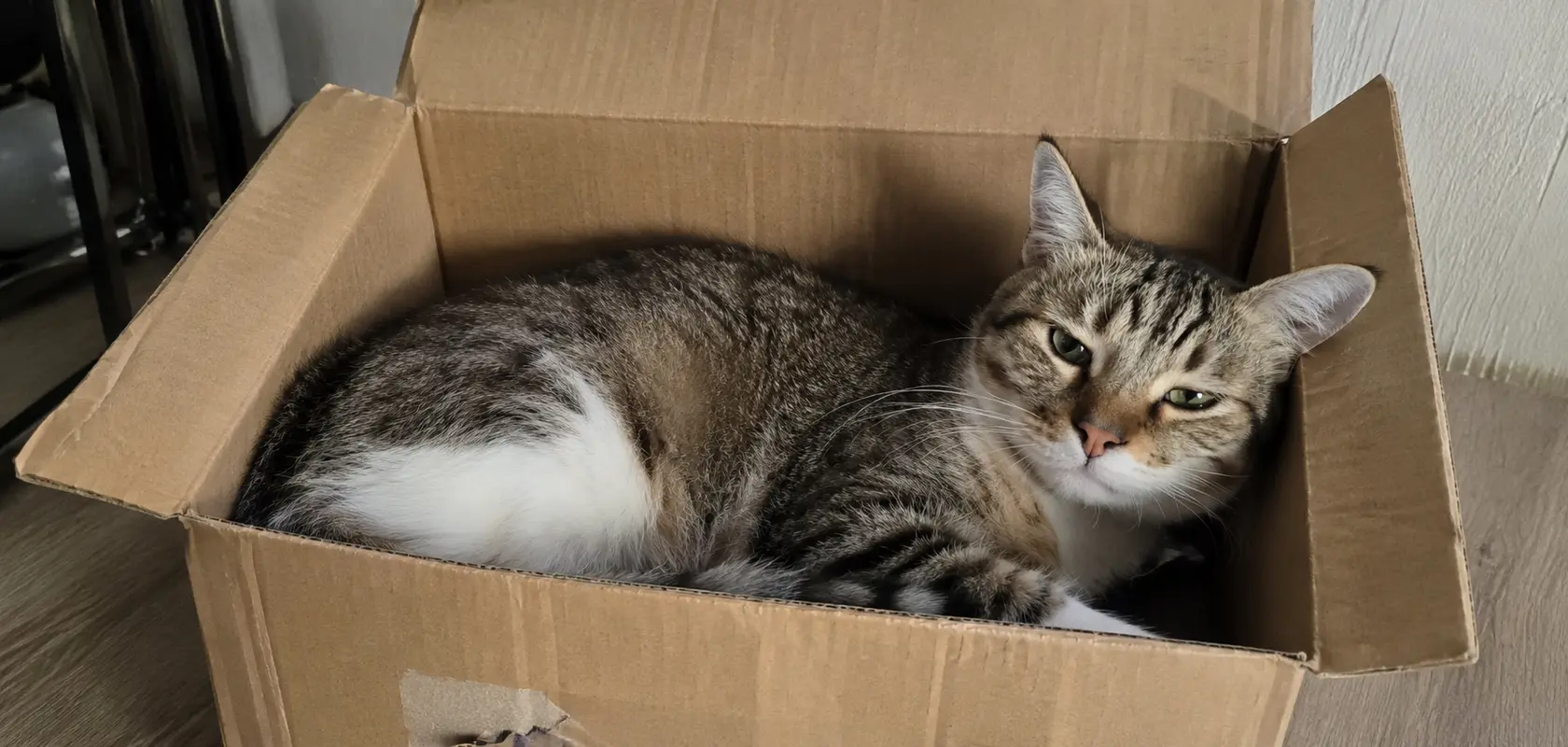
There are two things you can be almost certain of when you share your home with cats. First, nothing you buy for them will ever be quite as exciting as you hoped. And second, the cardboard box it arrived in will be an instant hit. Leave an empty box on the floor for five minutes and it will probably have a new owner. Leave two boxes and someone will inevitably want the one that’s already occupied. Size doesn’t seem to matter much either.
Some cats will happily squeeze themselves into boxes that appear to defy the laws of physics, while others prefer to sit inside a giant carton and stare at you as if they’ve just acquired a luxury apartment. So what’s the deal with cats and cardboard? Why do these otherwise rather ordinary packaging materials inspire such enthusiasm? As ridiculous as the whole phenomenon may look, there are some surprisingly sensible reasons behind it.
What Makes Cardboard So Irresistible to Cats?
Before we try to understand why cats are so obsessed with cardboard, let’s take a closer look at the material itself. Most shipping boxes are made from corrugated cardboard, which consists of layers of thick paper with a wavy layer sandwiched between them. This structure makes the material surprisingly strong while keeping it lightweight, flexible and easy to tear apart. And as far as cats are concerned, those are some pretty interesting qualities.
Cardboard is primarily made from cellulose, a natural component of wood and other plants. Depending on how it was manufactured and stored, a box may carry faint smells of paper, wood fibres, starch-based glue, ink and whatever it encountered during transport. Our noses might not pick up much beyond that familiar papery smell, but a cat’s sense of smell is considerably more sensitive than ours. A freshly delivered package can therefore be an interesting new object to investigate, even before anyone opens it.
Then there’s the texture. Unlike smooth plastic or metal, corrugated cardboard has a slightly rough, fibrous surface that offers resistance when a cat digs in its claws. It makes satisfying scratching noises, gives way under pressure and sometimes produces little pieces that are fun to chase around the floor.
Is Cardboard Really More Comfortable Than a Cat Bed?
You buy your cat a beautiful, soft, fluffy bed, place it in a quiet corner and wait for the inevitable expression of gratitude. Instead, your cat ignores it completely and curls up in the cardboard box it came in. Does that mean cardboard is somehow more comfortable than a proper cat bed? Not necessarily. What feels comfortable to us isn’t always what makes a cat feel comfortable. A brand-new cat bed may be wonderfully soft, but it also comes with unfamiliar smells.
Depending on the materials and manufacturing process, these can include synthetic fabrics, dyes and chemical residues. With their sensitive noses, cats may find some of these odours unpleasant or simply unfamiliar. Cardboard boxes can carry unfamiliar smells too, of course. But they offer other advantages, including enclosed spaces, firm surfaces and insulation. A box with high sides can provide a sense of security that an open, fluffy bed might lack.
Familiarity also plays an important role. Cats rely heavily on scent to recognise their surroundings and feel secure. That’s why the old sofa, a favourite blanket or a pile of your dirty laundry can be far more appealing than a brand-new sleeping spot. Your clothes carry your familiar scent, while regularly used furniture and blankets retain the cat’s own scent markings.
Can Cardboard Be Harmful to Cats?
Cardboard may look like a simple, natural material, but a shipping box isn’t necessarily made from untreated paper. Recycled cardboard can contain residues from printing inks, adhesives and other substances introduced during manufacturing. Depending on its intended use, packaging may also receive special coatings or treatments. However, the presence of chemical substances doesn’t automatically mean that a cardboard box poses a health risk to your cat.
You may have heard the rumour that Amazon treats its shipping boxes with rat poison or other pesticides to keep rodents away. This claim circulated widely online, but there is no credible evidence that Amazon routinely treats its cardboard boxes this way. The company has explicitly denied spraying its shipping boxes with pesticides or disinfectants. A more realistic concern is what happens when cats actually eat cardboard. Scratching, biting and tearing pieces off a box are normal forms of play, but swallowing cardboard is a different matter.
Small amounts may pass through the digestive system without causing problems, while larger quantities can lead to gastrointestinal irritation or even an intestinal blockage. Repeatedly eating non-food materials can also be a sign of pica, a behaviour worth discussing with a veterinarian. For cats that simply enjoy sitting in boxes, scratching their surfaces or occasionally chewing the edges, there’s generally little reason for concern. The important distinction is between playing with cardboard and regularly consuming it.